
From the blog
What Free Bonuses Are Actually Worth
A free digital bonus costs the seller nothing to duplicate, so it can be added to an offer without changing the price of the product. That is not dishonest — the files are real — but a stack of ebooks says nothing about what is in the bottle. Price the bonus by what you would pay for it alone, then judge the product on its Supplement Facts panel.
The economics of a free ebook
Start with the arithmetic that makes the whole practice work.
A physical bonus costs money every time it ships. A digital one costs money once, when it is made, and nothing thereafter. The thousandth copy of a PDF costs the same as the first: zero. So a seller adding a digital bonus to an offer is adding perceived value at no marginal cost, which is close to a free lunch in retail terms.
That is why bonus stacks appear where margins are thin and competition is fierce, and why they multiply. If one ebook raises conversions a little and costs nothing, four ebooks raise them more and also cost nothing. There is no natural brake on the number.
None of this is deceptive on its own. The files are real, you do receive them, and some of them are genuinely useful. The thing worth understanding is what their presence does and does not tell you.
The four on this product
The Jellyblue material includes four digital bonuses. Here they are, described rather than sold.
| Bonus | What it is | What it tells you about the gummy |
|---|---|---|
| The Power Challenge | An exercise and habit ebook | Nothing |
| Personalized Usage Guide | A usage ebook | Nothing. The label states the dose in one sentence |
| Memorable Preliminaries | A relationship ebook | Nothing |
| 365 Kama Sutra Positions | An adult positions guide | Nothing |
The second one is worth a moment. A “personalised usage guide” for a product whose entire instruction is “take one gummy daily with 8 oz of water, 20–30 minutes before a meal” is an ebook expanding a sentence. There is no version of that document which contains information the label does not.
The other three are lifestyle content aimed at the same worry the product is aimed at. Whether they are any good is a separate question from whether the gummy is, and the offer is structured so that the two questions feel like one.
What “$97 value” means
Bonus stacks are usually priced. You will see a bonus described as a “$97 value” or an “$47 value”, with the figures struck through and totalled at the bottom of the page.
Those numbers are chosen, not measured. A digital product has no market price unless it is sold separately at that price to people who are not buying anything else — and a bonus, by definition, is not. The figure describes what the seller would like you to believe the file is worth, which is a different quantity from what anyone has paid for it.
The useful test is the one you can run yourself, in about five seconds.
Imagine the ebook alone
Same file, same cover, on its own page, with no bottle attached.
Name your price
What would you actually pay for it? Not what it says it is worth — what you would pay.
That is the number
Whatever you said, that is the bonus’s value to you. Usually it is small, and sometimes it is zero.
Now ignore it
Judge the product on its panel. The bonus is not part of what you swallow.
This is not cynicism about ebooks. It is a way of keeping two separate judgments separate, which is precisely what a bonus stack is designed to prevent.
The other things sellers supply
Bonuses are the visible half of the offer architecture. The image set that came with this product contains the rest of it, and it is worth seeing.
There are five unlabelled portrait files named “avatar”. There is a three-photograph strip titled “social proof”, showing men holding the bottle. There is a portrait captioned with a person’s name, styled as an expert. And there is a stock medical illustration of a human body with organs highlighted.
None of those is a review, a study, a credential or a result. All four are the raw material from which a page that looks like evidence can be assembled in an afternoon.
The distinction that matters is between a photograph and an attribution. A photograph of a man holding a bottle is a photograph. A review is a statement, attached to a name, a date and ideally an order. The first can be bought from a stock library; the second cannot.
The Federal Trade Commission’s endorsement guides are the plain-English standard for this, and they are worth the ten minutes it takes to skim them. The short version is that an endorsement should reflect the honest opinion of the endorser, and that material connections should be disclosed (Federal Trade Commission, “Guides Concerning the Use of Endorsements and Testimonials in Advertising”).
The adult bonus, and why we describe it
One of the four bonuses is an adult positions guide, and its cover is explicit. We have described it in the table above and elsewhere on this site, and we have not printed the cover.
That is an editorial decision rather than a moral one. A product information site is read by people at work, on shared devices and on phones handed to other people, and the cover adds nothing to the only question this site exists to answer, which is what is in the bottle and at what amount.
It is also worth naming what the bonus is doing in the offer. It targets the specific, private worry that this whole category targets, and it does so more directly than the label is allowed to. The bottle says “male vitality support” with an asterisk; the bonus stack says the rest out loud. That gap between what a label may claim and what an offer may imply is where most of this industry lives.
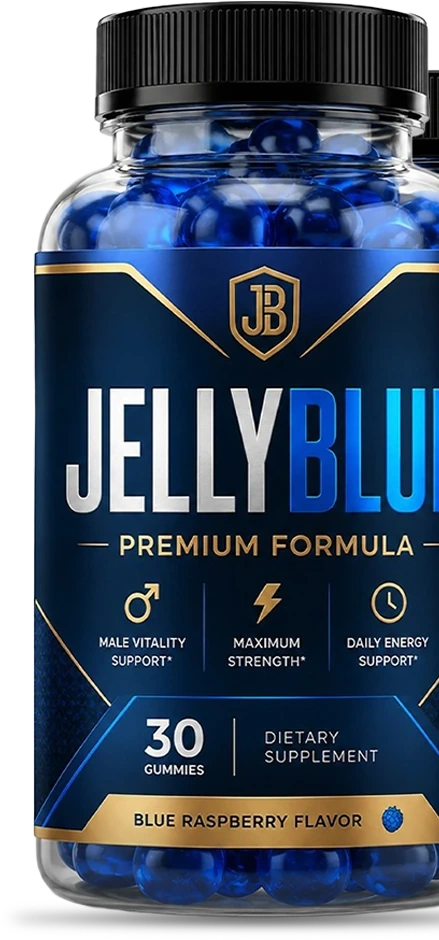
Skip the stack and read the Jellyblue panel.
Check today’s priceHow to price an offer instead of a stack
Here is the method, and it works on any page with a bonus block on it.
| Step | What to do | Why |
|---|---|---|
| 1 | Cover the bonus block with your hand | Literally. Scroll past it or put a finger on the screen |
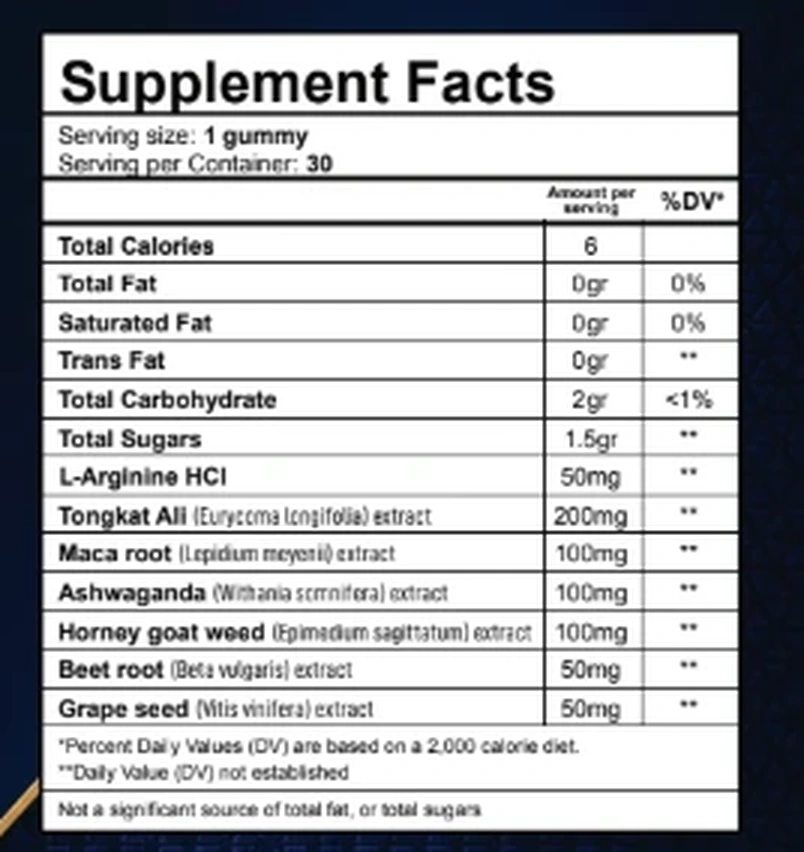
| 2 | Read the Supplement Facts panel | Seven amounts, or one blend total, or nothing at all |
| 3 | Run the two-number test on each amount | Label amount ÷ studied amount |
| 4 | Decide what the bottle is worth | On its own, with no ebooks attached |
| 5 | Now look at the price | If the number only makes sense with the bonuses included, the bonuses are doing the selling |
Step five is the one that does the work. A well-priced product is worth buying without the stack. An overpriced one needs it, and the surest sign of the second case is a page where the bonus block is larger, brighter and more detailed than the ingredient panel.
On this product, the ingredient panel is genuinely good — seven actives, seven printed amounts, no proprietary blend, one ingredient at a studied dose. It does not need four ebooks to justify itself, which makes the bonus stack an odd fit rather than a red flag.
And the bonus that is actually free
There is one more thing worth saying, because it is the honest alternative to everything above.
The information most likely to change how a man in this category feels is free, published, and not bundled with anything. Sleep guidance, resistance-training basics, the list of blood tests worth asking for, and the plain-language explanation of why erection problems are worth a doctor rather than a purchase — all of it is on public health sites, written by people with no stake in the sale (National Institute of Diabetes and Digestive and Kidney Diseases, “Erectile Dysfunction”).
The FDA also publishes a consumer guide to what a supplement label is required to tell you, and a public list of sexual-enhancement products found to contain undeclared prescription drug ingredients (U.S. Food and Drug Administration, “Dietary Supplements: What You Need to Know”; U.S. Food and Drug Administration, “Tainted Sexual Enhancement Products”). Between them they are more useful than any ebook in any stack, and nobody had to buy a bottle to get them.
The bottom line
A free digital bonus costs nothing to duplicate, so it can be added to any offer without changing the product. Its stated dollar value is a choice, not a measurement. Review avatars, social-proof strips and uncredentialled expert portraits are supplied artwork, not evidence.
Price the bonus by what you would pay for it alone. Then cover the stack, read the panel, and decide whether the bottle is worth the money on its own.
On this label, the panel survives that test better than most. Which is exactly why it is worth reading before the bonuses rather than after them.
Sources
- Federal Trade Commission. Guides Concerning the Use of Endorsements and Testimonials in Advertising. FTC, current revision. Link checked for the September 30, 2026 revision.
- U.S. Food and Drug Administration. Dietary Supplements: What You Need to Know. FDA, current revision. Link checked for the September 30, 2026 revision.
- U.S. Food and Drug Administration. Tainted Sexual Enhancement Products. FDA health fraud database. Link checked for the September 30, 2026 revision.
- National Institute of Diabetes and Digestive and Kidney Diseases. Erectile Dysfunction. NIDDK, current page. Link checked for the September 30, 2026 revision.
Questions on this topic
More answers on the full FAQ page.
Are free supplement bonuses a scam?
Not inherently. The files are real and you do receive them. They simply say nothing about what is in the product, and their stated dollar values are chosen rather than measured.
What does a “$97 value” mean?
That the seller has assigned that figure to a digital file which is not sold separately at that price. The useful test is what you would pay for it alone.
What is a review avatar?
A stock portrait supplied with a product’s marketing assets, used to illustrate reviews. It is a photograph, not a person who bought anything.
Should I trust a named expert in a product’s images?
Only if a credential, an institution and a statement from that person are published. A captioned portrait on its own is artwork.
Do the bonuses change whether Jellyblue is worth buying?
No. Judge the bottle on its Supplement Facts panel, then treat anything else as a bonus in the ordinary sense of the word.
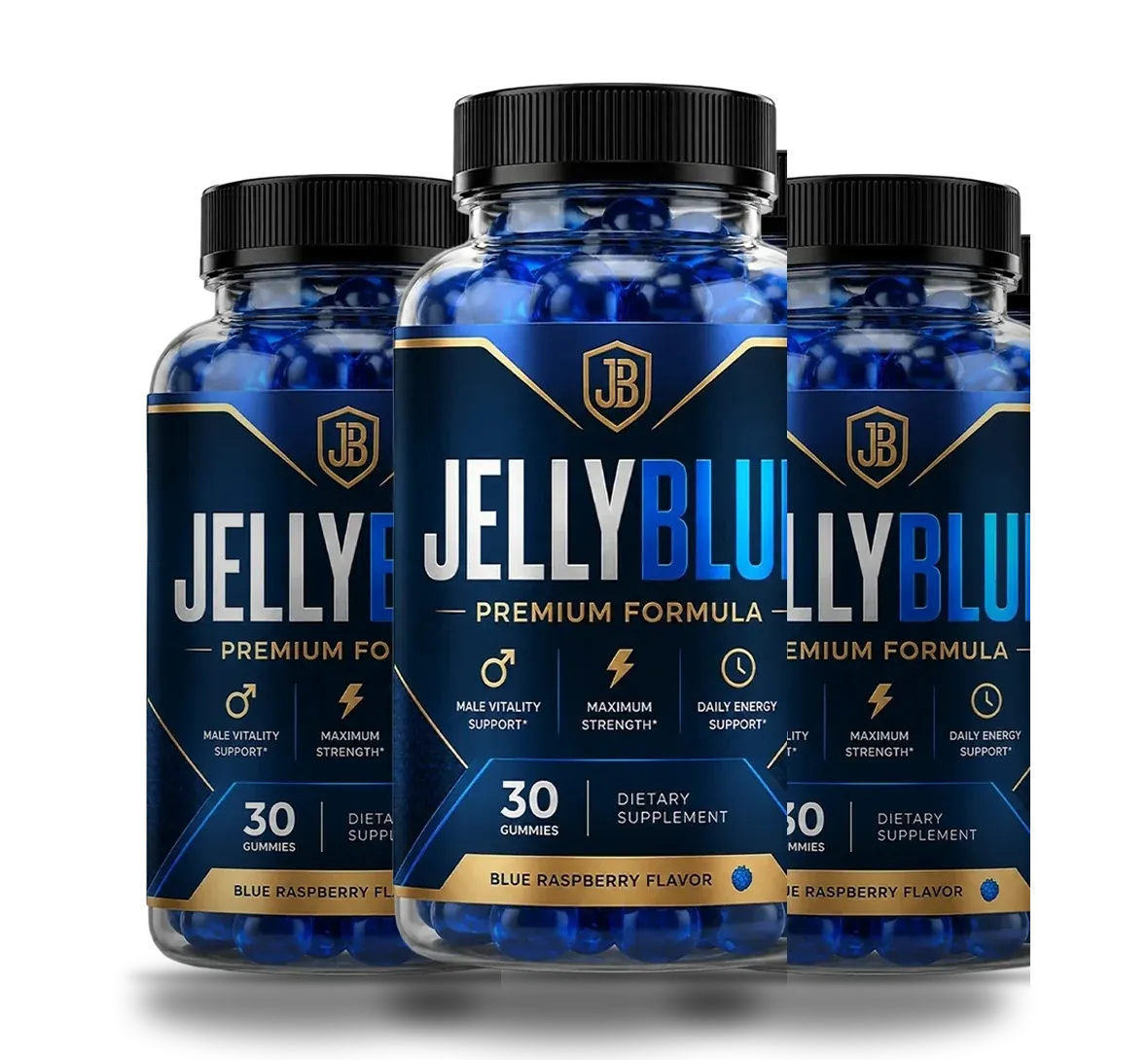
Ready to try Jellyblue?
Pick a pack and see the price at checkout. The money-back guarantee is 60 days from purchase, unless the sales page prints a longer window. Questions first? Contact the order desk.
Sold through a USA Authorized Jellyblue Retailer. This site is not the manufacturer and earns when you buy.Keep reading
What makes a dose real
How to tell a working amount from a name on an ingredient list: the two-number test, extra…
Read more →Why label typos matter
A Supplement Facts panel is a regulated document, not a poster. What five printing errors …
Read more →Jellyblue ingredients
All seven actives, with the amounts printed on the panel.
Read more →