Official product information
Jellyblue FAQ: 45 Common Questions Answered
This Jellyblue FAQ answers 45 questions in six groups, with a search box to find yours fast.
In short: one gummy a day, seven actives with every amount printed, prices at checkout and a 60-day guarantee.
New to it? Start with how to take Jellyblue.
All Jellyblue questions, searchable
Type a word to filter all 45 answers, or browse the six groups.
About the product
What is Jellyblue?
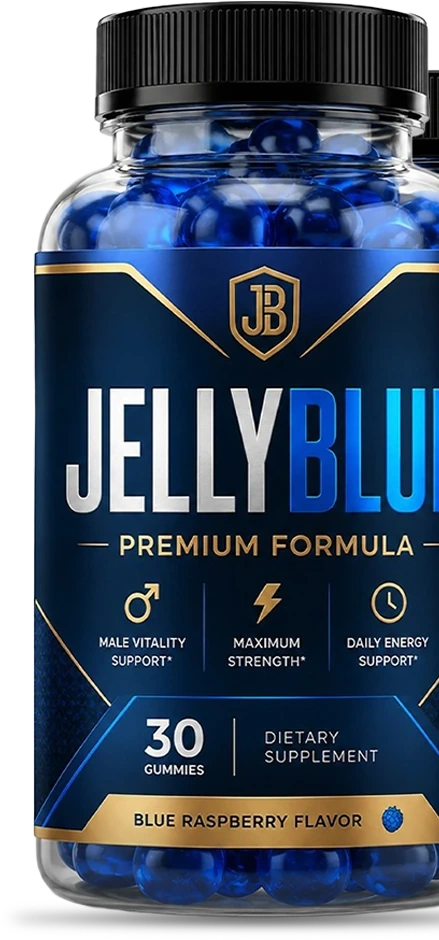
Jellyblue is a chewable blue raspberry gummy dietary supplement. The bottle reads “Jellyblue Premium Formula” and carries three asterisked claims: male vitality support, maximum strength and daily energy support. One bottle holds 30 gummies and the serving is 1 gummy.
Who makes Jellyblue?
The label names no manufacturer. It prints a distributor — Gex Corporation LLP, PO Box 12730, Ogden, UT 84404 — and “Manufactured in the USA with globally sourced ingredients”. This website is run by a USA Authorized Jellyblue Retailer, not the maker.
Is Jellyblue a testosterone booster?
The label does not say so. It claims “male vitality support”, “maximum strength” and “daily energy support”, each with an asterisk pointing at the standard FDA disclaimer. Nothing on the panel is a hormone.
Does Jellyblue treat erectile dysfunction?
No. It is a dietary supplement and the standard disclaimer applies: it is not intended to diagnose, treat, cure or prevent any disease. Persistent erection problems have medical causes worth investigating, and a doctor is the right first step.
Is Jellyblue a drug?
No. It is a dietary supplement, not a drug, and it is not FDA approved.
Is it vegetarian?
Yes, on the evidence of the label. The other-ingredients line is printed in full and the gelling agent is pectin, not gelatin. That is the first thing to check on any gummy, and this one passes.
What does it taste like?
Blue raspberry, per the front of the bottle. The other-ingredients line names cane sugar, glucose syrup, natural flavor and natural coloring.
Ingredients and dose
What is in Jellyblue?
Seven active ingredients with published amounts, totalling 650 mg: tongkat ali 200 mg, maca root 100 mg, ashwagandha 100 mg, horny goat weed 100 mg, L-arginine HCl 50 mg, beet root 50 mg and grape seed 50 mg. Plus 6 calories, 2 g of carbohydrate and 1.5 g of sugars.
Is there a proprietary blend?
No. Every active ingredient carries its own amount. That is genuinely uncommon in this category and it is the best thing about this label.
Which amounts are real doses?
One. Tongkat ali at 200 mg sits inside the 200–400 mg range trials of a standardised extract usually use. The other six are below their studied ranges — ashwagandha and grape seed by a factor of three to six, maca and L-arginine by far more.
How much ashwagandha is in it?
100 mg. Trials on stress, sleep and exercise generally use 300 to 600 mg a day of root extract, so this is a third to a sixth of a studied dose. No standardisation for withanolides is printed.
Why is beet root not in the marketing pictures?
We do not know. Beet root is printed on the panel at 50 mg, and the seller’s “Inside Jellyblue” graphic names six ingredients without it. The label is the document that counts.
How do I take Jellyblue?
As a dietary supplement, take one (1) gummy daily with an 8-ounce glass of water; for best results, take it 20–30 minutes before a meal, again with 8 oz of water, or as directed by your healthcare professional.
How long does a bottle last?
30 days at one gummy a day.
What are the other ingredients?
Printed in full on the label: cane sugar, glucose syrup, water, pectin, citric acid, sodium citrate, natural flavor, natural coloring, starch.
How much sugar is in a gummy?
The panel prints 1.5 g of total sugars and 6 calories, which is light for a gummy. It prints no “Includes … Added Sugars” line, even though cane sugar and glucose syrup are the first two other-ingredients.
Are there mistakes on the label?
Five that we can see. “Ashwaganda” is missing an h. “Horney goat weed” should be “horny”. The nutrition rows use “gr” where grams are meant. “Serving per Container” should be “Servings”. And “Total Calories” should simply be “Calories”.
Results and safety
How long does Jellyblue take to work?
No timeline is published or promised. Tongkat ali trials usually run four to twelve weeks, so if anything here does something, that is the timescale to judge it on — and the six other ingredients are below the amounts research used.
Does Jellyblue have side effects?
The label lists none beyond the standard caution. Tongkat ali at 200 mg is the ingredient present in a real amount; it is generally well tolerated in trials, with occasional restlessness or insomnia reported.
Can I take it with medication?
Ask a doctor first. Ashwagandha can interact with thyroid, sedative and immunosuppressant medicines; grape seed and beet root can lower blood pressure; horny goat weed carries heart cautions at real doses. The amounts here are mostly small, but your doctor should know everything you take.
Can I take more than one gummy?
No. The label asks you not to go past the recommended dose. Doubling up doubles the sugar and pushes tongkat ali to 400 mg, the top of the studied range, without any evidence that it helps.
Is Jellyblue FDA approved?
No. No dietary supplement is FDA approved. A registered facility is a factory the FDA knows about, which is a different thing.
Why take it before a meal?
The label says 20–30 minutes before a meal with 8 oz of water. No reason is given. For most of these ingredients, timing is far less important than taking it at all.
Can women take it?
It is marketed to men. The label is for adults 18 and over, and says pregnant or nursing mothers and anyone with a known medical condition should consult a physician first.
Is tongkat ali safe?
It is generally well tolerated in the trials that have been run, which are mostly small and short. MSK notes it should be avoided in people with hormone-sensitive conditions and that quality varies widely between products.
Buying and packs
How much does Jellyblue cost?
Prices are the ones printed on the sales page at checkout. We do not copy them here, because listing prices move.
What packs are there?
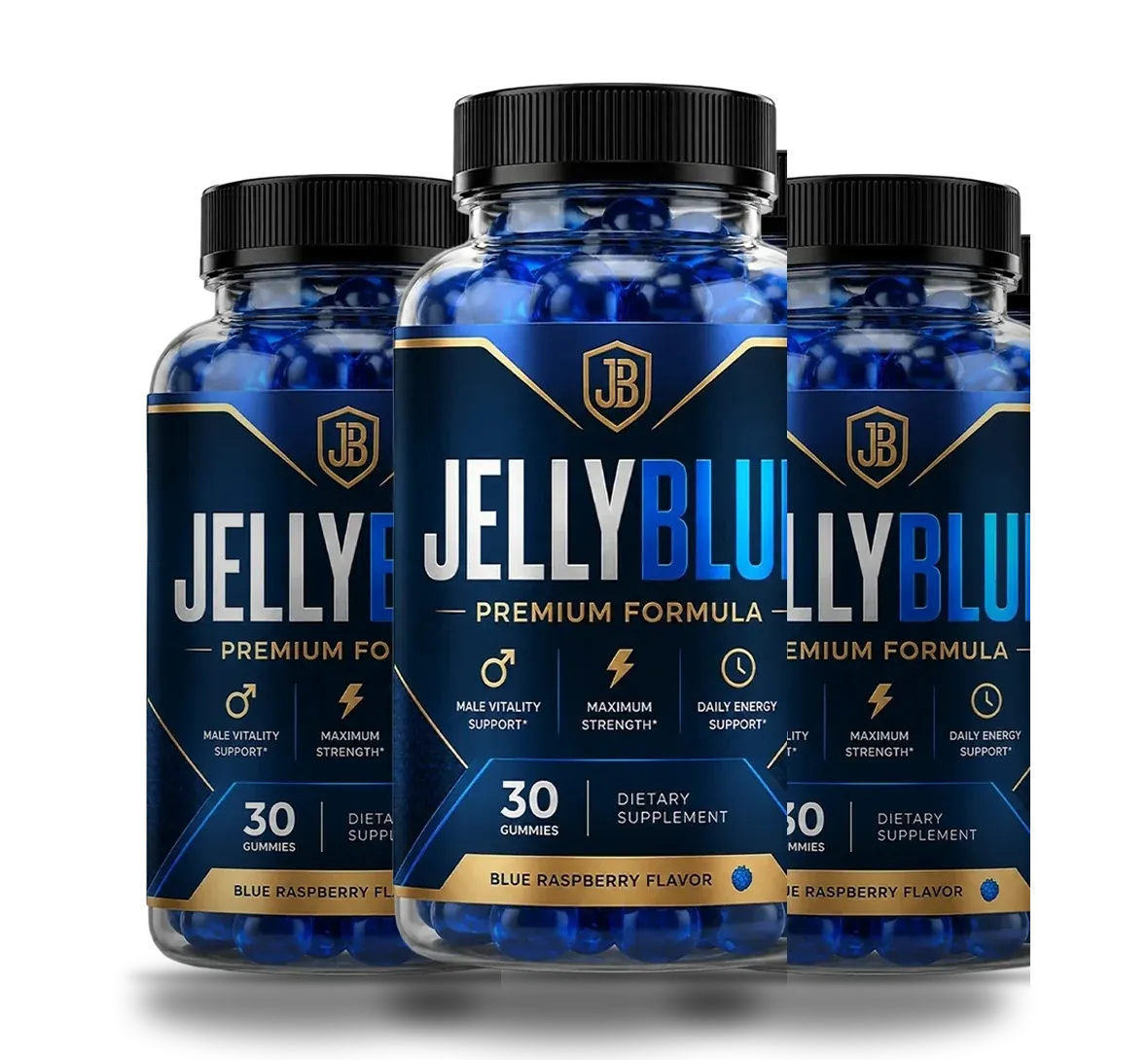
One, three and six bottles, from the seller’s product photos. The six-bottle pack is marked “most popular” and the three-bottle pack carries a free-shipping flag.
Which pack should I choose?
One bottle first. At one gummy a day that is 30 days, and it is the smallest amount of money at risk.
Where can I buy Jellyblue?
On jellybluedaily.com, through its order buttons, from a USA Authorized Jellyblue Retailer.
What are the free bonuses?
Four digital ebooks appear in the seller’s material: a power challenge, a personalised usage guide, a relationship guide and an adult positions guide. They are downloads, and they say nothing about what is in the bottle.
Do the gummies melt?
They can. The label says to store in a cool, dry place away from heat and light. A hot mailbox or a car in July is the usual culprit.
Shipping and refunds
Where does it ship from?
The US, unless the sales page says otherwise. Tracking arrives in the order email.
How much is shipping?
Not published. The cost shows at checkout before you pay, and the three-bottle pack image carries a free-shipping flag.
How does the guarantee work?
60 days from purchase, unless the sales page prints a longer window. Call the order desk with your order ID, then post the bottles back.
Where do I send a return?
1775 Broadway, Floor 8, New York, NY 10019. Put your full name, email and order ID in the box.
Who pays return shipping?
You do. Use tracked postage.
How long does a refund take?
It is issued 3–5 business days after the return is credited, then a further 5–10 days to show on your card.
Why are there two phone numbers?
The label prints the distributor’s own phone line and email, and the order desk for purchases made here has a separate number. All three are listed in the site footer. For orders, tracking and refunds, use the order desk.
This website
How do I contact Jellyblue support?
For tracking, changes and refunds on an order, call the order desk; for website and product questions, email the website inbox (Mon–Fri, 9:00 am–5:00 pm ET), which cannot see orders. Both are listed in the site footer.
Is this the Jellyblue maker’s website?
No. Jellybluedaily is run by a USA Authorized Jellyblue Retailer. The label names only a distributor.
What do the lot and CoA codes mean?
Lot JEL-26/JE-7723 and CoA JEL-7723-26-JE are draft label codes that help match a bottle to a batch. They are not lab proof, and no certificate is published.
Are there Jellyblue reviews?
No verified ones here. The seller’s pack includes a star score, an order count and sample reviews that repeat a template we have seen in other packs, and the image set includes generic review avatars, so we do not publish any of it as real.
Who is the expert in the photographs?
The seller’s image set includes a portrait captioned with a person’s name. No credential, institution or statement from that person appears anywhere in the material we were given, so we do not present them as an endorsement.
Why does this site criticise the product it sells?
Because the panel is a public document and anyone can read it. This label does several things well, and the places it falls short are printed on the bottle in black and white.
What would you publish if the maker sent more?
A standardisation for the tongkat ali extract, a certificate of analysis for the lot, a corrected panel, and a manufacturer name and street address.
Ready to try Jellyblue?
Pick a pack and see the price at checkout. The money-back guarantee is 60 days from purchase, unless the sales page prints a longer window. Questions first? Contact the order desk.
Sold through a USA Authorized Jellyblue Retailer. This site is not the manufacturer and earns when you buy.